Internal Tooth Resorption: Causes, Symptoms & Treatment

Dr. Mohamad Hassoun
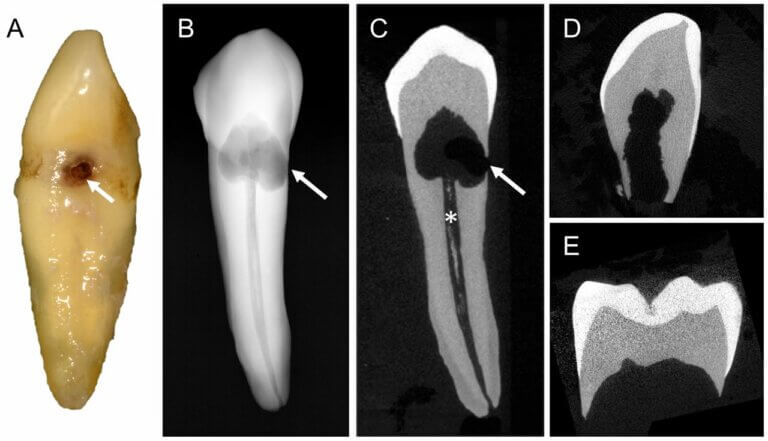
Internal resorption is a rare, generally asymptomatic inflammatory condition where odontoclast cells destroy the tooth structure from within the pulp chamber or root canal. Often triggered by dental trauma or caries, it appears on radiographs as a uniform, balloon-like enlargement of the canal. Early detection is vital for treatment, usually involving root canal therapy to remove the inflamed tissue.
Key Aspects of Internal Resorption:
Symptoms: Frequently asymptomatic but can present as a "pink spot" (pink tooth of mummery) on the crown, or sensitivity to cold/hot.
Causes: Primarily triggered by pulpal inflammation or trauma that damages the protective inner layer of the root canal (predentin).
Radiographic Appearance: A distinct, oval-shaped widening of the root canal space, often described as a ballooning effect.
Diagnosis: Confirmed via X-rays; unlike external resorption, the lesion remains centered within the root canal on angled radiographs.
Treatment: Early intervention with standard root canal therapy is generally successful to stop the resorption. If the root is perforated by the resorption, specialized materials like MTA (Mineral Trioxide Aggregate) are used.
If left untreated, this progressive process can lead to the weakening of the tooth structure and eventually tooth loss.